
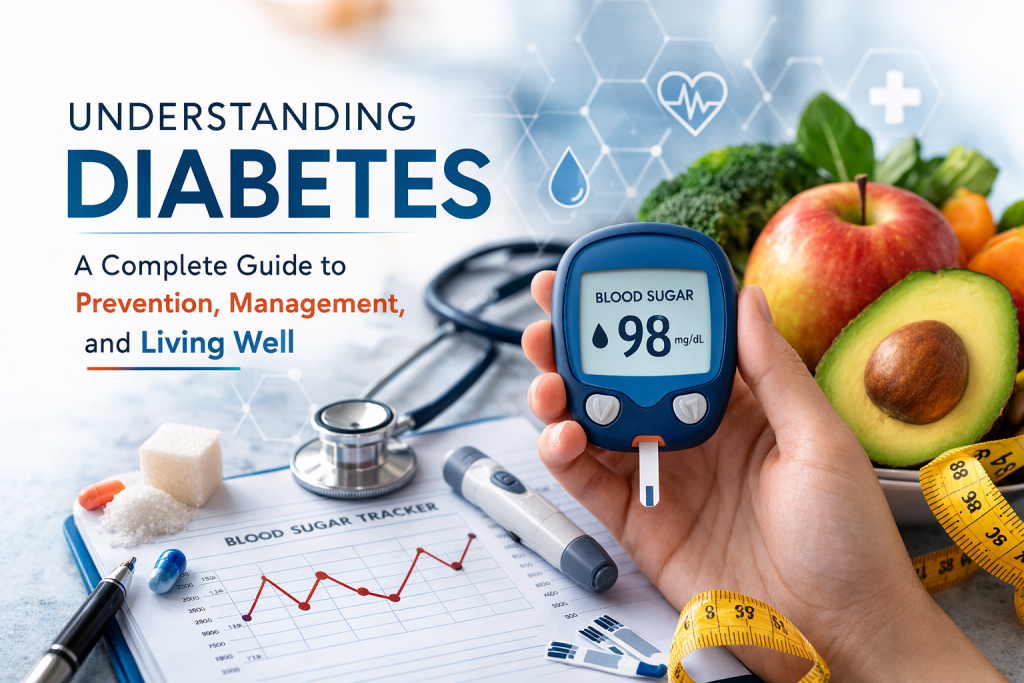
Understanding Diabetes: A Complete Guide to Prevention, Management, and Living Well
Introduction
Diabetes is one of the most common chronic health conditions worldwide, affecting hundreds of millions of people. It occurs when the body is unable to properly regulate blood sugar (glucose), leading to levels that are too high. Over time, uncontrolled diabetes can cause serious complications affecting the heart, kidneys, nerves, and eyes.
The good news? With proper knowledge, lifestyle changes, and medical support, diabetes can be managed effectively — and in many cases, Type 2 diabetes can even be prevented. This guide will help you understand what diabetes is, its types, symptoms, causes, treatment options, and how to live well with it.
What Is Diabetes?
Diabetes mellitus is a chronic condition that affects how your body uses glucose, the main source of energy for your cells.
When you eat, your body breaks down carbohydrates into glucose, which enters your bloodstream. The pancreas releases insulin — a hormone that helps glucose move from the blood into the cells for energy.
If:
- The body doesn’t produce enough insulin, or
- The body cannot use insulin effectively (insulin resistance),
then glucose builds up in the bloodstream. This results in high blood sugar (hyperglycemia), which can damage organs over time.
Types of Diabetes
A. Type 1 Diabetes
Type 1 diabetes is an autoimmune condition where the immune system attacks insulin-producing cells in the pancreas. People with Type 1 diabetes produce little or no insulin and require lifelong insulin therapy.
It often develops in childhood or adolescence but can occur at any age.
B. Type 2 Diabetes
Type 2 diabetes is the most common form. It occurs when the body becomes resistant to insulin or does not produce enough of it.
Risk factors include:
- Overweight or obesity
- Sedentary lifestyle
- Family history
- Poor diet
It develops gradually and is often preventable.
C. Gestational Diabetes
This type occurs during pregnancy when hormonal changes affect insulin function. It usually resolves after childbirth but increases the risk of developing Type 2 diabetes later in life.
D. Prediabetes
Prediabetes means blood sugar levels are higher than normal but not high enough for a diabetes diagnosis. It is a serious warning sign — but with lifestyle changes, it can often be reversed.
Causes and Risk Factors
Diabetes develops due to a combination of genetic and lifestyle factors.
Common risk factors include:
- Family history of diabetes
- Being overweight or obese
- Lack of physical activity
- High blood pressure
- High cholesterol
- Age over 45
- History of gestational diabetes
- Polycystic Ovary Syndrome (PCOS)
Poor dietary habits — especially excessive intake of refined carbohydrates and sugary beverages — also increase risk.
Common Symptoms of Diabetes
Symptoms may develop gradually, especially in Type 2 diabetes.
Common signs include:
- Increased thirst
- Frequent urination
- Extreme hunger
- Fatigue
- Blurred vision
- Slow-healing wounds
- Frequent infections
- Unexplained weight loss (more common in Type 1)
If you notice these symptoms, it is important to consult a healthcare professional for testing.
How Diabetes Is Diagnosed
Doctors use blood tests to diagnose diabetes:
Fasting Blood Sugar Test
- Normal: below 100 mg/dL
- Prediabetes: 100–125 mg/dL
- Diabetes: 126 mg/dL or higher
HbA1c Test
Measures average blood sugar over 2–3 months.
- Normal: below 5.7%
- Prediabetes: 5.7–6.4%
- Diabetes: 6.5% or higher
Oral Glucose Tolerance Test
Measures blood sugar before and after drinking a glucose solution.
Random Blood Sugar Test
A reading of 200 mg/dL or higher with symptoms suggests diabetes.
Complications of Uncontrolled Diabetes
When blood sugar remains high for long periods, serious complications may occur:
- Heart disease and stroke
- Kidney damage (nephropathy)
- Nerve damage (neuropathy)
- Eye damage (retinopathy)
- Foot ulcers and infections
- Increased risk of amputations
- Depression and anxiety
Early management greatly reduces these risks.
Diabetes Management and Treatment
Managing diabetes involves a combination of lifestyle changes and, in some cases, medication.
A. Healthy Eating
- Focus on whole grains, vegetables, lean protein, and healthy fats
- Limit refined sugars and processed foods
- Control portion sizes
- Increase fiber intake
- Stay hydrated
A balanced plate method works well:
½ vegetables, ¼ protein, ¼ whole grains.
B. Physical Activity
Exercise helps improve insulin sensitivity and lowers blood sugar.
Aim for:
- At least 150 minutes of moderate exercise per week
- Strength training 2–3 times weekly
- Daily movement (walking, stretching)
C. Medications
Some people may need:
- Oral medications (like metformin)
- Insulin injections
- Other injectable medications
Medication depends on the type and severity of diabetes.
D. Lifestyle Habits
- Maintain healthy body weight
- Manage stress
- Get 7–9 hours of sleep
- Avoid smoking
- Limit alcohol intake
Can Diabetes Be Prevented?
Type 1 diabetes cannot currently be prevented.
However, Type 2 diabetes is often preventable through:
- Maintaining a healthy weight
- Eating a balanced diet
- Regular physical activity
- Reducing sugary drink intake
- Managing blood pressure and cholesterol
Studies show losing even 5–7% of body weight can significantly reduce risk.
Living Well with Diabetes
A diabetes diagnosis does not mean you cannot live a full life. With proper management, many people lead healthy, active lives.
Tips for living well:
- Monitor blood sugar regularly
- Attend routine medical check-ups
- Build a support system
- Educate yourself about nutrition
- Prioritize mental health
- Celebrate small progress
Consistency matters more than perfection.
Frequently Asked Questions
Is diabetes curable?
Type 1 diabetes is not curable. Type 2 diabetes can sometimes go into remission with major lifestyle changes.
Can people with diabetes eat sugar?
Yes, in moderation and within a balanced diet plan.
Is fruit safe?
Yes. Whole fruits contain fiber and are healthier than fruit juices.
What is normal blood sugar?
Typically 70–99 mg/dL when fasting.
How often should blood sugar be checked?
This depends on the type of diabetes and treatment plan.
Conclusion
Diabetes is a serious but manageable condition. Early detection, healthy lifestyle habits, and proper medical care can prevent complications and improve quality of life.
If you suspect you may have diabetes or are at risk, consult a healthcare provider for testing and personalized guidance. Taking action today can protect your long-term health and well-being.