
Why Low-Sugar Meal Planning Matters
Blood sugar stability is not just a concern for people with diabetes—it affects energy levels, mood, hunger, inflammation, and long-term health for everyone. Frequent blood sugar spikes and crashes can lead to fatigue, intense cravings, brain fog, and over time, increased risk of insulin resistance, type 2 diabetes, and cardiovascular disease.
Low-sugar meal planning is not about eliminating all carbohydrates or living on “diet food.” Instead, it focuses on choosing the right types of carbohydrates, pairing them with protein and healthy fats, and spreading intake evenly throughout the day.
This guide will walk you through:
- How blood sugar works (in simple terms)
- What “low sugar” actually means
- How to build balanced meals
- Smart grocery and meal-prep strategies
- Common mistakes to avoid
- A sample low-sugar day of eating
This article is designed to be evergreen, practical, and realistic, whether you’re newly diagnosed, insulin-sensitive, or simply prioritizing metabolic health.
Understanding Blood Sugar (Without the Jargon)
When you eat carbohydrates, your body breaks them down into glucose (sugar), which enters your bloodstream. In response, your pancreas releases insulin, a hormone that helps move glucose into your cells for energy.
Problems arise when:
- Too much sugar enters the bloodstream at once
- Insulin becomes less effective (insulin resistance)
- Blood sugar spikes quickly and crashes shortly after
Low-sugar meal planning helps by:
- Slowing glucose absorption
- Reducing insulin demand
- Supporting consistent energy throughout the day
What “Low-Sugar” Really Means
Low-sugar does not mean sugar-free or carb-free.
Instead, it focuses on:
- Minimizing added sugars
- Choosing low-glycemic carbohydrates
- Balancing meals with protein, fiber, and fats
Added Sugars to Limit
- Sugary drinks (soda, sweet tea, flavored coffee)
- Candies, pastries, cakes
- Sweetened yogurts and cereals
- Sauces with hidden sugars (ketchup, BBQ sauce)
Natural Sugars Are Different
Sugars found in whole fruits, vegetables, legumes, and dairy come packaged with fiber and nutrients, which slow absorption and reduce spikes.
The Core Principles of Low-Sugar Meal Planning
1. Balance Every Meal
A balanced plate helps prevent blood sugar swings.
Aim for:
- ½ plate non-starchy vegetables
- ¼ plate protein
- ¼ plate complex carbohydrates
- Add healthy fats in moderation
This combination slows digestion and keeps glucose levels steadier.
2. Choose Low-Glycemic Carbohydrates
Not all carbs raise blood sugar equally.
Better choices:
- Brown rice, quinoa, barley
- Oats (steel-cut or rolled)
- Sweet potatoes
- Beans, lentils, chickpeas
- Whole fruits (berries, apples, citrus)
Limit or pair carefully:
- White rice
- White bread
- Refined pasta
- Sugary cereals
Portion control and pairing with protein are key.
3. Prioritize Protein at Every Meal
Protein:
- Slows carbohydrate absorption
- Reduces post-meal blood sugar spikes
- Increases satiety and reduces cravings
Protein options:
- Eggs
- Fish and seafood
- Chicken or turkey
- Tofu and tempeh
- Beans and lentils
- Greek yogurt (unsweetened)
Even breakfast should include protein to avoid mid-morning crashes.
4. Don’t Fear Healthy Fats
Fats slow digestion and help stabilize blood sugar when eaten in moderate amounts.
Good fat sources:
- Avocados
- Olive oil
- Nuts and seeds
- Fatty fish (salmon, sardines)
Avoid excessive amounts of fried or highly processed fats, which can worsen insulin resistance.
5. Eat at Consistent Times
Skipping meals or eating erratically can lead to:
- Large blood sugar swings
- Overeating later in the day
- Increased insulin demand
Try to:
- Eat every 3–5 hours
- Avoid long fasting periods unless advised by a healthcare provider
- Maintain consistent meal timing daily
Smart Grocery Shopping for Low-Sugar Eating
Read Labels Carefully
Added sugars hide under many names:
- Sucrose
- High-fructose corn syrup
- Dextrose
- Maltose
- Rice syrup
- Cane juice
Choose products with little to no added sugar, especially sauces, dressings, and snacks.
Shop the Perimeter First
Focus on:
- Fresh vegetables
- Lean proteins
- Dairy alternatives with no added sugar
- Whole grains in measured portions
Packaged foods can fit—but choose intentionally.
Meal Prep Tips for Blood Sugar Stability
Meal prep reduces decision fatigue and prevents impulsive high-sugar choices.
Easy Prep Strategies
- Roast a tray of mixed vegetables
- Cook a batch of grains and legumes
- Pre-portion proteins
- Wash and chop fruits for snacks
Having balanced components ready makes low-sugar eating effortless.
A Sample Low-Sugar Day of Eating
Breakfast
- Vegetable omelet with spinach and tomatoes
- ½ cup steel-cut oats with chia seeds
- Black coffee or unsweetened tea
Snack
- Greek yogurt (unsweetened) with berries and nuts
Lunch
- Grilled chicken or tofu
- Quinoa or brown rice
- Steamed vegetables with olive oil
Snack
- Apple slices with peanut butter
Dinner
- Baked fish or legumes
- Roasted vegetables
- Sweet potato (moderate portion)
This structure balances carbs, protein, fat, and fiber throughout the day.
Common Low-Sugar Mistakes to Avoid
❌ Cutting Carbs Completely
This often leads to fatigue, nutrient deficiencies, and rebound overeating.
❌ Relying on “Sugar-Free” Processed Foods
Many contain artificial sweeteners or refined starches that still affect blood sugar.
❌ Skipping Meals
This can cause blood sugar dips and later spikes.
❌ Ignoring Portion Sizes
Even healthy carbs can spike glucose in large amounts.
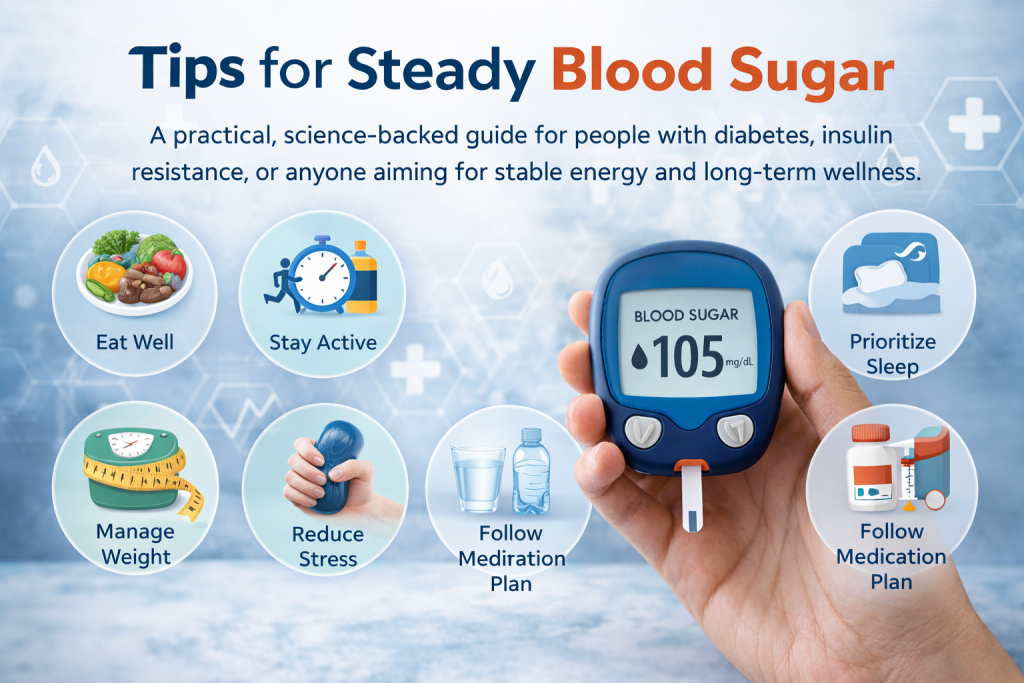
Beyond Food: Lifestyle Habits That Support Blood Sugar
Low-sugar meal planning works best when paired with:
- Regular movement (walking after meals helps glucose uptake)
- Quality sleep
- Stress management (stress hormones raise blood sugar)
- Hydration
Food is powerful—but it works best as part of a holistic lifestyle.
Making Low-Sugar Eating Sustainable
Sustainability matters more than perfection.
Tips for long-term success:
- Focus on patterns, not single meals
- Allow flexibility for special occasions
- Build meals you genuinely enjoy
- Adjust based on how your body responds
Low-sugar meal planning is not a short-term diet—it’s a supportive way of eating that adapts to real life.
Final Thoughts
Low-sugar meal planning is one of the most effective tools for maintaining steady blood sugar, supporting insulin sensitivity, and improving overall well-being. By focusing on balanced meals, whole foods, and consistent habits, you can protect your energy, reduce cravings, and support long-term health—without feeling restricted.
Whether you’re managing diabetes, insulin resistance, or simply aiming for better wellness, these principles provide a flexible foundation you can build on for life.